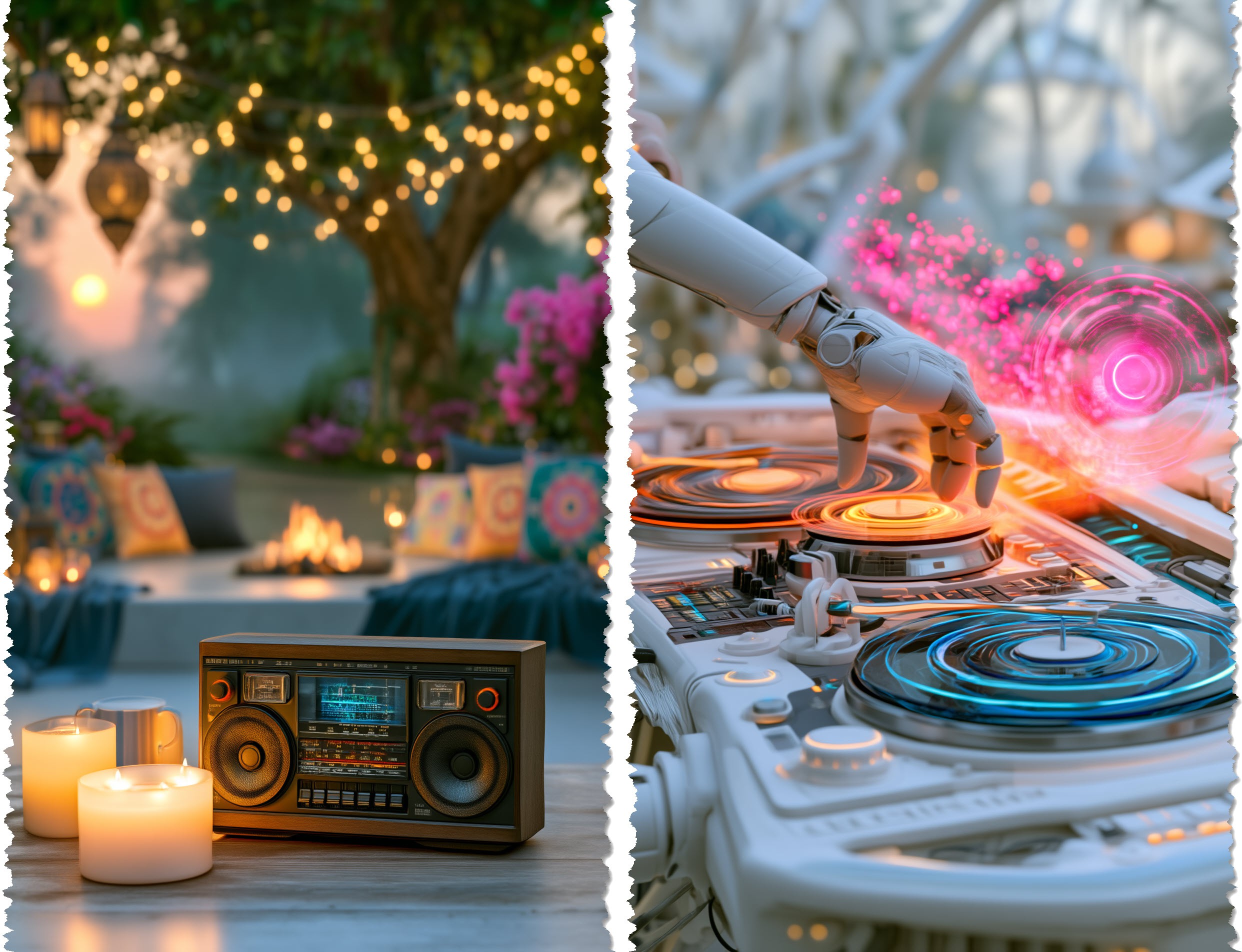
For an independent music artist, music discovery can feel like watching a single song travel through many different kinds of weather. A listener might find a track through an algorithmic playlist, internet radio, a personal recommendation, or a quiet moment of intentional listening. They might stumble into cinematic soundscapes, atmospheric music, reflective music, authentic music, or storytelling in music without knowing what category to search for first. So, are playlists dead? Do people still discover music through radio? I don’t think either one has disappeared. I think the more interesting question is what kind of relationship each path makes possible.
You are invited and welcome here. Come into this little listening space without pressure, look around, and stay as long as you’d like. Nicole Victoria Lauren creates music across house, cinematic, orchestral, singer-songwriter, classical crossover, and experimental spaces, but the heart of the work is not a genre label. It is an open door. Some songs may make you want to move; others may ask you to sit quietly for a while. Both are welcome.
Discovery has more than one doorway
Playlists are very much alive. They are convenient, familiar, and often the easiest way to shape a mood. We can choose a playlist for a morning walk, a long drive, focused work, a dinner with friends, or a night when we need music that understands us without asking too many questions.
Algorithmic playlists can also introduce us to artists we might never have found on our own. A recommendation appears, and suddenly there is a new voice in the room. That is not a small thing.
But convenience has its limits. A song can be placed beside hundreds of others, heard for a few seconds, and then disappear beneath the next recommendation. Discovery happens, but it may not always become listening. And listening does not always become a lasting relationship.
That distinction matters to me.
A playlist placement can create an impression. A meaningful discovery gives someone a reason to return.
The human feeling of radio
Radio offers something different, especially when the programming is shaped by a person rather than generated entirely by a system. A radio host is not only selecting tracks; they are creating a flow. They are considering energy, contrast, timing, mood, and the strange little chemistry that happens when one song follows another.
There is a sense of being accompanied.
Even internet radio, which can reach listeners anywhere in the world, retains some of that shared experience. You may be listening alone, but you are entering a moment that someone else has helped arrange. The music is not simply waiting for you in an enormous digital library. It is being presented as part of a particular hour, a particular atmosphere, and a particular point of view.
That human context can make room for serendipity. You may tune in for one song and hear something entirely unexpected. You may not have searched for house music that morning, but a bassline catches your attention while coffee is brewing. At least, I know that has happened to me. Many times:)
Sometimes the best discoveries are not made by hunting. They are made by being present.
My first known radio airplay
For Nicole Lauren, this question became personal when her music was included in the Friday 8:00 AM–12:00 PM Eastern rotation on “Unscripted Radio With Daddy Roy.”
This was Nicole’s first known radio airplay. There was no grand strategy behind the moment, no attempt to force the music into a shape it did not naturally have. There was simply a person, LeRoy Mardenborough: warmly known as Daddy Roy: creating space for the work and welcoming it into his programming.
All five of Nicole’s songs were included in the rotation.
That news brought excitement, of course, but also surprise, gratitude, and a little disbelief. When you work independently, a song can spend a long time close to you. You write it, arrange it, revise it, listen to it until you cannot tell whether it is finished or merely familiar, and eventually you let it leave the room.
Then, one day, you learn that it is traveling through somebody else’s speakers.
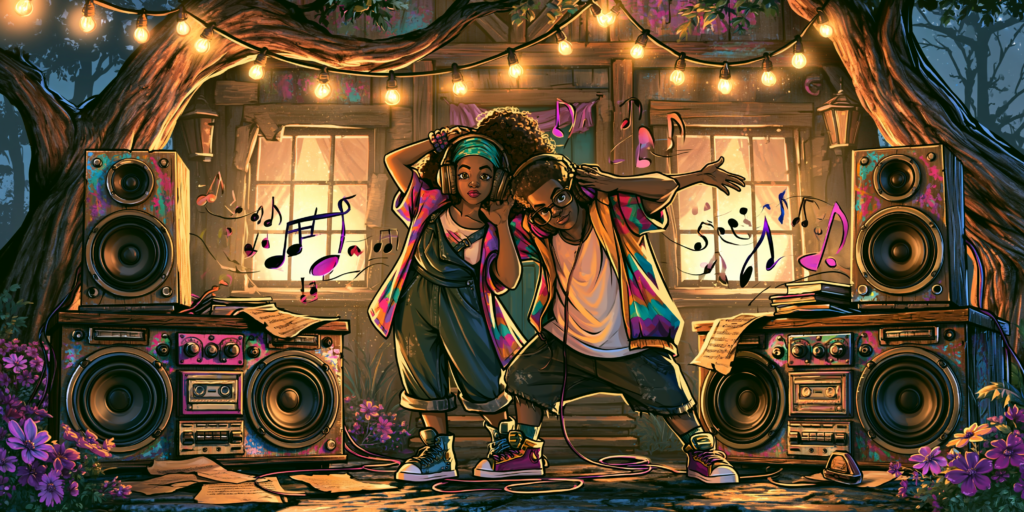
That is a vulnerable feeling. It is also beautiful.
“I’m grateful to LeRoy for hearing something in my work and giving these songs a place in his rotation,” Nicole says. “It means a lot to know that my music may be part of someone’s Friday morning.”
The gratitude is simple and sincere. LeRoy did not merely create another outlet for music; he created a human point of contact. He made the distance between an independent artist and a listener feel a little smaller.
Why the Friday house-music rotation matters
Nicole’s catalog does not stay in one musical room. It can move from intimate and reflective pieces into energetic house music, then travel toward orchestral textures or cinematic soundscapes. That range is intentional. The work is not built around the idea that every release must sound alike.
So being included in a Friday house-music rotation felt meaningful in a particular way.
Some of Nicole’s music is designed to hold stillness. Some of it has its head in the clouds. And some of it wants to put on slightly ridiculous dance shoes and have a good time. There is room for all of those instincts in the creative process. A four-on-the-floor beat can be just as sincere as a quiet piano phrase. Joy does not have to be shallow, and reflective music does not have to be solemn every minute of the day. Sometimes the heart needs a little groove. 🙂
Radio gave this side of the catalog a new setting. The songs could meet listeners within a larger movement of house music, alongside other artists and sounds, without needing to explain themselves too much. They could simply participate.
That is one of the gifts of programming: context without confinement.
Algorithms are useful: but they are not the whole story
Algorithms are not villains. They can be helpful guides through an overwhelming amount of music. They can notice patterns in our listening and offer possibilities based on what we have enjoyed before. For listeners, this can be a gentle way to keep exploring.
But an algorithm does not know everything about a song’s inner life. It does not necessarily understand why a particular lyric mattered to the person who wrote it, or why a rough edge was left in place, or why a composition needed to wander before it found its way home.
This is where Prima Voca comes in.
Prima Voca means “first voice”: the intuitive voice that arrives before comparison, doubt, trend analysis, and the imagined demands of an algorithm. It is the spark that says, this feels true, even when the idea does not fit neatly into a category.
For Nicole, sincerity and imagination matter more than whether a song follows a current trend, lands in a fashionable playlist, or uses traditional tools in an expected way. The question is not whether the music has been made according to somebody else’s formula. The question is whether the heart of it is alive.
That applies to listening, too.
Discovery becomes meaningful through return
A placement: on a playlist, radio show, blog, or social feed: can be a beginning. It is not the destination.
The most meaningful kind of discovery happens when someone hears a song and chooses to come back. Maybe they save it for a difficult day. Maybe they play it during a drive and notice a different detail the second time. Maybe they share it with a friend, not because they were asked to, but because the music found a small place in their life.
That is the difference between exposure and connection.
A song does not need to become part of everyone’s day. It only needs to reach the people who are open to meeting it. Nicole’s work is not made for one narrow audience, and disagreement is perfectly acceptable. You might love the house music and feel less drawn to the cinematic pieces. You might connect deeply with an orchestral work and skip another song entirely. There is no test to pass here.
Music is personal. The welcome remains open.

Listen in when you feel like it
Nicole’s music appears in the Friday 8:00 AM–12:00 PM Eastern rotation on Unscripted Radio With Daddy Roy. If you happen to listen, thank you. If you discover another artist there, that is wonderful too. The point is not to turn a radio hour into an advertisement; it is to appreciate the people and spaces that help music move from one person to another.
You can also explore Nicole’s broader music catalog, read more about her approach in The Listening Room, or learn about the creative compass behind the work through Prima Voca.
So, are playlists dead?
No. And radio is not dead either.
Playlists offer access, convenience, and personalized pathways through music. Radio: particularly human-curated internet radio: offers context, surprise, and the feeling of sharing a moment with someone who cares about what they are presenting. Personal recommendations bring trust. Intentional listening brings depth.
Each doorway can lead somewhere worthwhile.
For Nicole Lauren, first known radio airplay on Unscripted Radio is meaningful not because it guarantees a number or changes the creative compass, but because it creates a genuine chance for the music to be heard. A song has another room to enter. Another morning. Another listener.
And sometimes, that is how a lasting relationship with music begins: not with a strategy, but with a sound arriving at the right moment.