Hello there. Come on in, take a coat off, and stay as long as you’d like. I’m so glad you found your way to this little corner of the internet. It’s Wednesday, June 3rd, 2026, and I’ve been sitting here in the “studio” looking at the papers on my music stand that are not relevant to music, lol, thinking about why we still use words like “alternative” to describe what we do.
When I look out the window at the world today, it feels like we’re living in a beautiful, messy soup of sound. Everything is accessible. Every genre, every era, every weird little experimental bleep and bloop is just a click away. So, in a world where the boundaries have largely dissolved, does the label “Alternative Music Artist” actually carry relevance anymore? Or is it just a dusty old sticker we keep trying to slap on things that don’t quite fit?
I’ve always felt a bit like a square peg in a round hole: or maybe a cloud trying to fit into a shoebox. Let’s talk about that.
The Metadata Game: Fitting into the Bucket
If you peek behind the curtain of the music industry in 2026, you’ll see a lot of wires and code. To the big streaming platforms and the algorithms that feed us our daily playlists, labels are just metadata. They are buckets. If I want someone to find a song like Rain Deluge, I have to tell a computer where to put it.
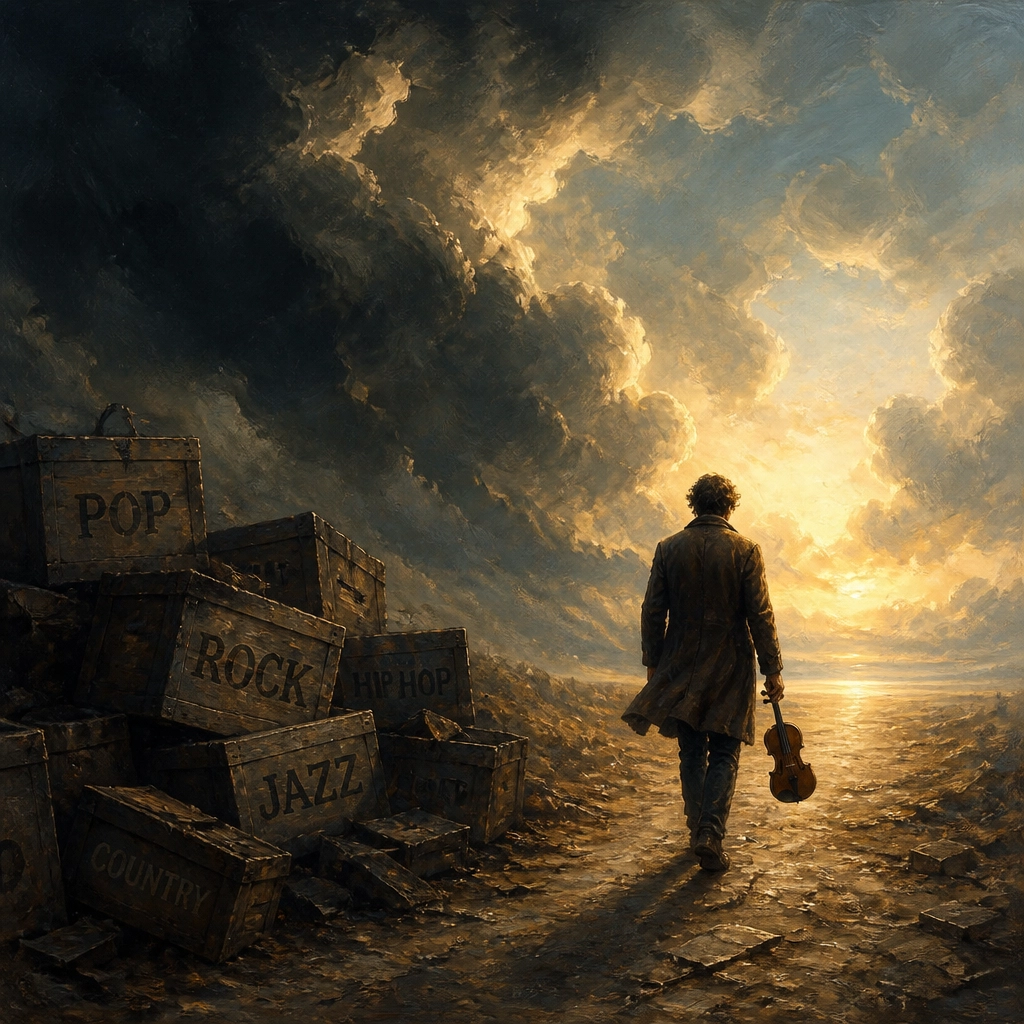
But here’s the thing: “Alternative” has become the “miscellaneous” drawer of the music world. It’s where you put the stuff that has too much heart for a commercial jingle but doesn’t quite have the polished edges of mainstream pop. It’s a box, sure, but for many of us, it’s a box that’s always been a little too small.
In 2026, the industry uses these labels for editorial playlists: you’ve seen them: Alternative Weekly, Indie 2026, Atmospheric Landscapes. They help people navigate the noise. But as listeners, we’ve moved past that. We don’t listen to “genres” as much as we listen to “vibes” or “moods.” We look for something that matches the storm inside us or the quiet peace of a Sunday morning.
Prima Voca: My North Star
If the label doesn’t really matter, what does? For me, it’s always been about Prima Voca: the “first voice.” It’s that initial, gut-level spark of sincerity that happens before the analytical mind starts worrying about whether a track is “radio-friendly” or “on-trend.”
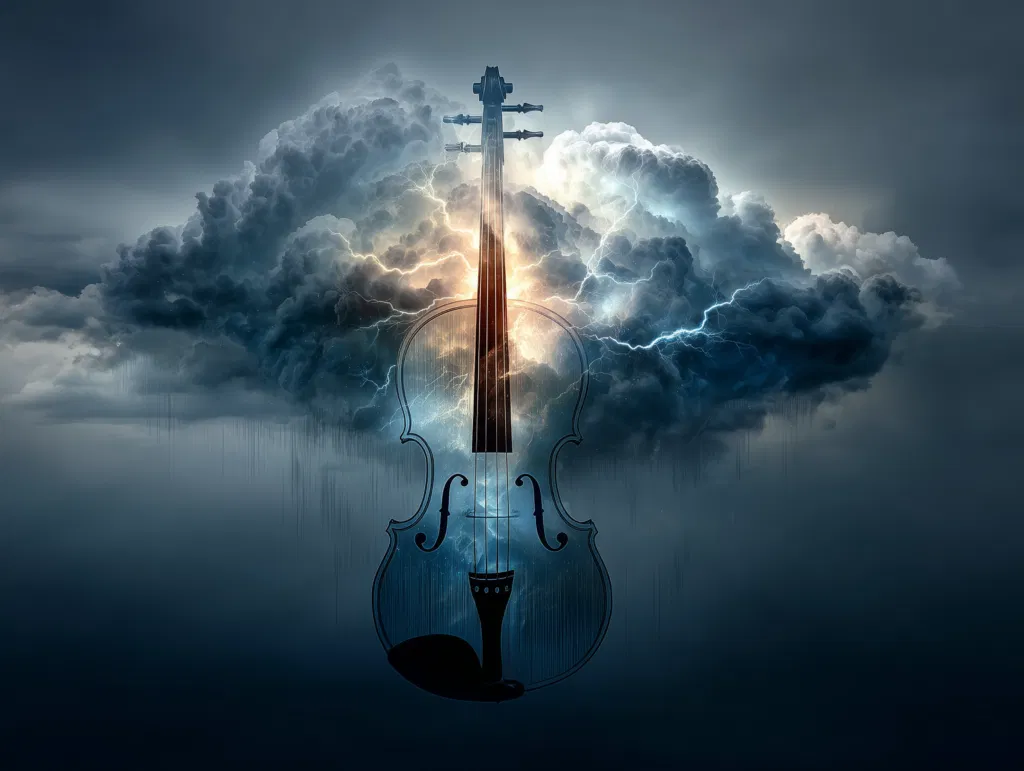
In my work at NVL Music, I try to let that first voice lead the way. Whether I’m working on something immersive and storm-like or something reflective like A Toast to My Friends, the goal is the same: honesty.
In 2026, “Alternative” doesn’t mean a specific sound. It doesn’t mean “guitars” or “lo-fi.” It means intentionality. It means choosing to follow your own imagination rather than chasing the tail of a trend that will be gone by Tuesday. It’s about building a body of work that prioritizes meaning and longevity. I’d much rather write a song that feels like a warm hug ten years from now than a song that gets a million likes today and is forgotten tomorrow.
The Human Anchor in a Digital Sea
We can’t talk about 2026 without talking about the tools we use. AI is everywhere now: it’s in our DAW, our marketing, even our recommendation engines. And honestly? That’s okay. Tools are just tools. But as an alternative artist, I believe the “human heart” has to remain the anchor.
I sometimes use the human voice as a storyteller. Sometimes I layer it until it sounds like a choir in a cathedral; sometimes it’s just a raw, vulnerable whisper. No matter how many AI-assisted textures or cinematic soundscapes I layer in, the core has to be something a person felt.
There’s a certain vulnerability in sharing raw drafts or “work-in-progress” snippets in The Listening Room. It’s scary to show the messy parts, but I think that’s why “alternative” still matters. It’s the space where we’re allowed to be messy, human, and a little bit goofy. It’s where we can admit that we don’t have all the answers, but we have a lot of feelings.
Why “Alternative” is Actually Freedom
So, does it matter? Is it relevant? Does being an “alternative” artist carry weight in 2026?
I think it matters more than ever, but not for the reasons the industry might think. It matters because it’s a declaration of independence. It’s saying, “I am going to make something that feels true to me, regardless of the algorithm.”
When you label yourself as alternative, you’re essentially giving yourself permission to explore. You can be cinematic one day and playful the next (like with “Dunkman“). You can write about the “Rain Deluge” or you can write about sitting in a quiet room. You aren’t beholden to a brand identity that requires you to stay in one lane.
Being alternative in 2026 means being an explorer of the inner world. It’s for the people who crave substance, who want music that doesn’t just fill the silence but says something to them.
You’re Invited to Stay
If you’ve read this far, thank you. Truly. It’s people like you: who value sincerity and imagination: that make this whole “music” thing worth it.
I’m still figuring things out, and most of my projects are perpetually “in-progress” because life is a bit of a work-in-progress, isn’t it? But you are always welcome here. Whether you’re here for the cinematic storms or just to hear a friendly voice, I hope you find something that resonates with your own “first voice.”
Take your time, look around the site, and if you want to chat or share what’s on your mind, I’m always listening. Disagree with me? That’s totally fine too! This is a low-pressure zone.
Until next time, keep your head in the clouds and your heart on your sleeve.
Warmly,
Nicole
There’s more to explore in the listening room.
(c) 2026 Prima Voca